In these posts, with the author’s permission, I look at their work pre-editing and post-editing—and at what I did to improve the piece.

Today Mary Connealy is In The Edit. You know Mary “Romantic comedies with cowboys” Connealy. Her latest book, In Too Deep, takes place in Colorado in 1866 and involves a marriage of convenience. Isn’t that sweet? That Mary, she’s a sweet gal. I’ve known—and read—Mary for a long time, but I’ve never read anything she’s done like today’s sample.
And you know what? It’s good! Not sweet, no. As a sample, it’s twice as long as I asked for. As a read, it’s far too short.
Mary’s edit
Mary’s sample arrested my attention. After reading through it several times, I found these main things I would address as an editor:
- As always, extra words/repetitions
- Ways to heighten the tension
- Subtle hints that things aren’t as they appear—to the reader or to this character.
Read my edit in track changes.
Joy in repetition
Writers—and I’m talking to myself as well—get so enthralled with what we’re writing. We often latch on to a particular phrase because it sounds so cool, but then we fail to let go of that phrase.
In Mary’s sample there is lots of thunder and lightning that is important to the set-up. So the challenge becomes saying the same thing, but in new ways. There were too many times when “lightning lit up the sky” or “thunder streaked across the sky.”
I also thought there were opportunities to make the setting a malevolent character in this piece. So you’ll see in the edit some tweaking from me to address those issues.
In the first couple grafs there are places where extra words slow the reader just when you don’t want that to happen:
- Thunder streaked across the sky
growing in speedlike an incoming missile. - The thunder exploded again, tearing a
Ascreamtorefrom herthroat.
In the first bullet point, “growing in speed” seemed redundant to both “thunder streaked” and “like an incoming missile” so I cut it. The result is a faster, leaner sentence that gives a strong word picture.
In the second bullet, I took two short sentences, which normally picks up the pace, and instead used them to give the storm a sinister personality. Rather than the ambiguous “a scream tore from her throat” we now have the thunder tearing that scream from her—and we don’t mention the throat (where else would a scream come from?) because less specific at this point is more frightening.
Delicious tension
Those who aren’t members of the Big Honkin’ Chicken Club love tension. We love the adrenaline rush of the unknown.
In paragraph seven, there’s an opportunity to amp it up. Mary’s original started this graf with more pain description I thought belonged better with the graf before it. With that move done, we’re free to increase the threat to this character.
To do that, I suggest once again using the setting as a malevolent, active force. Since Mary had already used “the thunder streaked,” I changed that to “rumbled.” Then I set off with em dashes the phrase “built force” (more immediate and active than “building force”) and included the concept of the thunder as a predator in that sentence thereby tying it to “the thunder” as a character rather than using it as narrative.
Those aren’t tears?
Mary did a great job of hiding the true nature of this character’s tears. But once I got to the end and realized what she’d done, I saw more opportunities for this kind of misdirection.
The main suggestion I have is to hide it even better. I think Mary includes a few too many hints that things aren’t as they appear. Providing enough hints without giving it away is a fine line to walk. What you have to be careful of is spoiling the big reveal.
In my edit I highlighted in yellow all the times tears were mentioned or alluded to. Made me think of my Shakespeare: “The lady doth protest too much, methinks.” (Hamlet) The more Mary mentioned tears the more I started to think “those aren’t tears.” You want to be subtle so that when the truth is revealed the reader is surprised, realizing the truth at the same time the character does. So I eliminated a couple of them to mitigate the problem.
Read my edited version, clean.
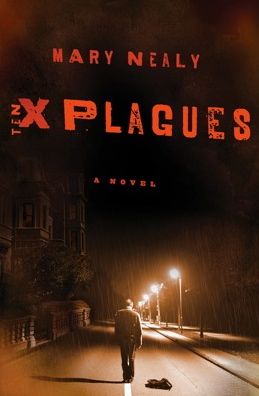 If you like this style of writing from Mary, you may be interested to know that she writes suspense under the pen name Mary Nealy. I did not know this. Last year she released Ten Plagues, from Barbour Books. Find it here. I know I will.
Mary, thanks for coming Into The Edit with me!
If you would like to see your writing in a future In The Edit post, send a maximum of 350 words to michael.ehret (at) inbox (dot) com. Please send in Word format (.doc). If I use it, you’ll be eligible for a 25-percent discount on any editing services (link).
On Thursday, we’ll look at another self-editing writing tip. See you then! Then on Saturday, drop by for a quick writer’s quote and to share what that quote means to you.
 Michael Ehret, for Writing On The Fine Line


What do you think?